
more animals

 150 cats, 3 dogs and many small animals perished during a fire at our local animal shelter.
 Aravis Girl has an interesting post about The Evolution of a Story.
 On a different note, for all of you programming geeks: here is a funny program for Putting up the Christmas Tree.
 Uploaded my book cover to my NaNoWriMo page today. My story will be new age fiction with a hint of mystery. Title: Lost & Found.
I enjoy experimenting with motivations, consequences, reactions and choices. It helps me to understand life, mankind's role in life and, best of all, myself.
 A visitor to a certain college paused to admire the new Hemingway Hall that had been built on campus.
"It's a pleasure to see a building named for Ernest Hemingway," he said.
"Actually," said his guide, "it's named for Joshua Hemingway. No relation."
The visitor was astonished. "Was Joshua Hemingway a writer, also?"
"Yes, indeed," said his guide. "He wrote a check."
________________________________________________________________
A linguistics professor was lecturing to his English class one day. "In English," he said, "a double negative forms a positive. In some languages, though, such as Russian, a double negative is still a negative. However, there is no language wherein a double positive can form a negative."
A voice from the back of the room piped up, "Yeah, right."
A writer died and was given the option of going to heaven or hell.
She decided to check out each place first. As the writer descended into the fiery pits, she saw row upon row of writers chained to their desks in a steaming sweatshop. As they worked, they were repeatedly whipped with thorny lashes.
"Oh my," said the writer. "Let me see heaven now."
A few moments later, as she ascended into heaven, she saw rows of writers, chained to their desks in a steaming sweatshop. As they worked, they, too, were whipped with thorny lashes.
"Wait a minute," said the writer. "This is just as bad as hell!"
"Oh no, it's not," replied an unseen voice. "Here, your work gets published."
There was once a young man who, in his youth, professed his desire to become a great writer.
When asked to define great, he said, "I want to write stuff that the whole world will read, stuff that people will react to on a truly emotional level, stuff that will make them scream, cry, howl in pain and anger!"
He now works for Microsoft writing error messages.
A screenwriter comes home to a burned down house. His sobbing and slightly-singed wife is standing outside. “What happened, honey?” the man asks.
“Oh, John, it was terrible,” she weeps. “I was cooking, the phone rang. It was your agent. Because I was on the phone, I didn’t notice the stove was on fire. It went up in second. Everything is gone. I nearly didn’t make it out of the house. Poor Fluffy is--”
“Wait, wait. Back up a minute,” The man says. “My agent called?”
How many science fiction writers does it take to change a light bulb?
Two, but it's actually the same person doing it. He went back in time and met himself in the doorway and then the first one sat on the other one's shoulder so that they were able to reach it. Then a major time paradox occurred and the entire room, light bulb, changer and all was blown out of existence. They co-existed in a parallel universe, though.
How many publishers does it take to screw in a light bulb?
Three. One to screw it in. Two to hold down the author.
How many mystery writers does it take to screw in a light bulb?
Two. One to screw it almost all the way in, and the other to give it a surprising twist at the end.
How many screenwriters does it take to screw in a light bulb?
Why does it *have* to be changed?
How many cover blurb writers does it take to screw in a light bulb?
A VAST AND TEEMING HORDE STRETCHING FROM SEA TO SHINING SEA!!!!
 This is from an email I received. I thought it was too cute not to share. The e-mail says they are taken from actual high school essays and collected by English teachers across the country for their own amusement. Some of these kids may have bright futures as humor writers. What do you
think?
1. Her face was a perfect oval, like a circle that had its two sides gently compressed by a ThighMaster.
2. His thoughts tumbled in his head, making and breaking alliances like underpants in a dryer without Cling Free.
3. He spoke with the wisdom that can only come from experience, like a guy who went blind because he looked at a solar eclipse without one of those boxes with a pinhole in it and now goes around the country speaking at high schools about the dangers of looking at a solar eclipse without one of those boxes with a pinhole in it.
4. She grew on him like she was a colony of E. Coli, and he was room-temperature Canadian beef.
5. She had a deep, throaty, genuine laugh, like that sound a dog makes just before it throws up.
6. Her vocabulary was as bad as, like, whatever.
7. He was as tall as a six-foot, three-inch tree.
8. The revelation that his marriage of 30 years had disintegrated because of his wife’s infidelity came as a rude shock, like a surcharge at a formerly surcharge-free ATM machine.
9. The little boat gently drifted across the pond exactly the way a bowling ball wouldn’t.
10. McBride fell 12 stories, hitting the pavement like a Hefty bag filled with vegetable soup.
11. From the attic came an unearthly howl. The whole scene had an eerie, surreal quality, like when you’re on vacation in another city and Jeopardy comes on at 7:00 p.m. instead of 7:30.
12. Her hair glistened in the rain like a nose hair after a sneeze.
13. The hailstones leaped from the pavement, just like maggots when you fry them in hot grease.
14. Long separated by cruel fate, the star-crossed lovers raced across the grassy field toward each other like two freight trains, one having left Cleveland at 6:36 p.m. traveling at 55 mph, the other from Topeka at 4:19 p.m. at a speed of 35 mph.
15. They lived in a typical suburban neighborhood with picket fences that resembled Nancy Kerrigan’s teeth.
16. John and Mary had never met. They were like two hummingbirds who had also never met.
17. He fell for her like his heart was a mob informant, and she was the East River.
18. Even in his last years, Granddad had a mind like a steel trap, only one that had been left out so long it had rusted shut.
19. Shots rang out, as shots are wont to do.
20. The plan was simple, like my brother-in-law Phil. But unlike Phil, this plan just might work.
21. The young fighter had a hungry look, the kind you get from not eating for a while.
22. He was as lame as a duck. Not the metaphorical lame duck, either, but a real duck that was actually lame, maybe from stepping on a land mine or something.
23. The ballerina rose gracefully en Pointe and extended one slender leg behind her, like a dog at a fire hydrant.
24. It was an American tradition, like fathers chasing kids around with power tools.
25. He was deeply in love. When she spoke, he thought he heard bells, as if she were a garbage truck backing up.

* Writing and Editing are two separate, and different processes. It is that important.
* Write first. Edit later.
* Write first. Edit later. It is that important.
* Outline only if it works for you.
* Write every day.
* Write what you want to read, not what you think someone else will.
* Keep a ritual.
* Stick to it.
* When you are not writing, read.
* Read a lot.
* Read everything: comics, newspapers, novels, magazines, screenplays, poetry, billboards, tattoos, mustard wrappers, everything.
* Read your own writing. Out loud.
* Read other people’s writing. Out loud.
* Don’t read to comprehend. This is about writing.
* Read to write. Notice the context, flow, and tone.
* Listen to people speak.
* Don’t listen to comprehend. This is about writing.
* Notice the context, flow, and tone.
* Write with different tools: keyboard, pencil, ink pen, crayon, dirt, whatever.
* Write on different mediums: grid paper, lined paper, blank paper, cardboard, LCD, canvas, dirt, whatever.
* Write in different places, but keep and maintain a Writing Home.
* Tell everyone you write: your family, your friends, the postman, the prostitutes, everyone.
* But don’t tell anyone exactly what you are writing: not even the prostitutes.
* Strike dead every should you have about writing.
* Put aside this list, and every other piece of advice, or book, or adage about writing ever offered.
* And write every day.
Snatched from here:
http://journal.barleyhut.com/the-only-general-writing-advice-you-will-ever-need/

 The
The 
So what are you waiting for? FREE eBOOKs HERE.
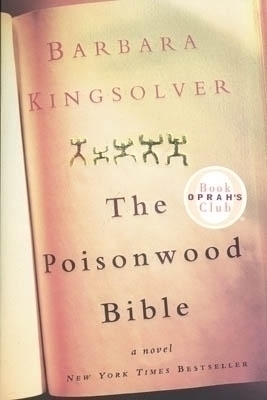
You're The Poisonwood Bible!
by Barbara Kingsolver
Deeply rooted in a religious background, you have since become both
isolated and schizophrenic. You were naively sure that your actions would help people,
but of course they were resistant to your message and ultimately disaster ensued. Since
you can see so many sides of the same issue, you are both wise beyond your years and
tied to worthless perspectives. If you were a type of waffle, it would be
Belgian.
Take the Book Quiz
at the Blue Pyramid.
Thanks to
 “How does one become a butterfly?
“Happiness is a butterfly, which when pursued, is always just beyond your grasp, but which, if you will sit down quietly, may alight upon you.”
~Nathaniel Hawthorne
“Words – so innocent and powerless as they are, as standing in a dictionary, how potent for good and evil they become in the hands of one who knows how to combine them.”
~Nathaniel Hawthorne
 Nienke,
I truly enjoyed guest blogging on THE WRITING LIFE the other day. Afterward, I found myself wishing that I could thank all those inventors who have given us this new medium for sharing our ideas and our lives. To my way of thinking, the net is close to a miracle.
Technology has long interested me. In fact, my current book project deals with engineering marvels. I’m having such fun learning about processes such as Backward Planning (huh?) and Failure Analysis. (I have lots of personal examples to draw upon.)
Back to the blog that I posted here: I want to thank the participants for their thought-provoking questions and comments. I came away enriched.
In the blog I explained that WORDS OF A FEATHER got published thanks to an agent who was looking for a funny word book. I should have mentioned the agent’s name—Carol Roth—and her website www.authorsbest.com. Carol specializes in nonfiction. Who knows? Perhaps she can be of use to some of the talented writers who frequent THE WRITING LIFE. That would be a nice denouement, which word—I can’t help but point out—relates etymologically to noose.
1. ARBITRATOR: A cook that leaves Arby's to work at McDonalds
2. AVOIDABLE: What a bullfighter tried to do
3. BERNADETTE: The act of torching a mortgage
4. BURGLARIZE: What a crook sees with
5. CONTROL: A short, ugly inmate
6. COUNTERFEITERS: Workers who put together kitchen cabinets
7. ECLIPSE: What an English barber does for a living
8. EYEDROPPER: A clumsy ophthalmologist
9. HEROES: What a guy in a boat does
10. LEFTBANK: What the robber did when his bag was full of money
11. MISTY: How golfers create divots
12. PARADOX: Two physicians
13. PARASITES: What you see from the top of the Eiffel Tower
14. PHARMACIST: A helper on the farm
15. POLARIZE: What penguins see with
16. PRIMATE: Removing your spouse from in front of the TV
17. RELIEF: What trees do in the spring
18. RUBBERNECK: What you do to relax your wife
19. SELFISH: What the owner of a seafood store does
20. SUDAFED: Brought litigation against a government official
Thanks, Nienke, for your thoughtful announcement of my visit. You made me feel welcome at your remarkable website.
I’m the kind of writer who likes a distraction. Could be the smell of coffee in the other room, or a “dump your microwave oven” urban myth that plops onto my desktop. No surprise, therefore, that as I began typing this piece about words origins, I allowed my attention to be drawn to your Tip of the Day: “Always take the attitude of a learner in your writing and be open to new insights from any source.” I hope it won’t seem that I’m malingering if I comment on this sage advice before I get down to business.
In the 1990s, I enrolled in UCLA’s screenwriting program. At age 51 I thought I knew everything about cranking out scripts. I just wanted to meet producers so I could sell my work. But in my first class I discovered how much I had to learn about story structure. That humbling experience confirms the wisdom of your tip about being curious.
Now about words: In high school, I could take the study of etymology or leave it. Actually, I was more into leaving it. But as the years passed, I gradually became intrigued by word histories. I even began collecting doublets: word pairs that at first seem unrelated and yet are etymological kissing cousins. Examples include: anger & angina, automobile & mob, chaos & gasoline, computer & reputation, flatulence & inflation, candid & candidate. And my favorite: rectitude & rectum.
Such pairs—“words of a feather”— inspired me to write mini essays for my own amusement, especially when I had a pressing deadline. Take, for “excrement & secret”:
“Three may keep a secret, “wrote Ben Franklin, “if two of them are dead.” Ben’s witty observation points to the etymology of secret, which traces to the Latin se meaning “apart” and cretus meaning “separate.” A “secret” is knowledge kept apart from others. Hence, a secretary’s first function is to guard the boss’s private information. (Apparently, a few secretaries working for the British royal family never got the message.)
But what has this to do with excrement? Here’s the poop: The ex is Latin for “out” and the cre goes back to our old friend cretus, “separate.” Thus excrement refers to something “separated out.” Although in this case we’re not talking about information, it’s still a private matter, definitely hush hush.
If you want a loftier example, consider: “cosmos & cosmetics”:
The ancient Greeks named the universe kosmos, meaning “order.” Their belief that order is the key to beauty gave rise to the related word kosmetikos: the art of creating personal beauty.
The English version—cosmetics—developed around the time Isaac Newton published his theory about the orderly forces binding the cosmos.
Ironically, in this same period, the anti-adornment crowd made an effort to enact laws criminalizing the use of cosmetics for the purpose of seducing innocent victims into matrimony.
I had no plans for publishing these stories until an agent called saying that she knew an editor who was looking for a humorous word book. Did I have anything? Absolutely, only most of it was gathering digital dust on old computers. Six months later, Words of a Feather was published, which seems weird to me because I’ve spent years unsuccessfully peddling some of my manuscripts, and here came a contract out of the blue. The lesson? Even if you’re not an environmentalist, do not send your old computers to the landfill.
Lest I give the impression that etymology is merely an entertainment, let me end with a serious point. Sometimes when I’m writing, I’ll find myself staring at a word that, while I’ve used it my whole life, now seems unfamiliar.
If I look up the word’s etymology, I often have an epiphany. Here’s an example. Recently I was finishing a hilarious (don’t I hope) coming-of-age story. I viewed my protagonist Dan as a hero although he doesn’t see himself capable of accomplishing heroic deeds. Indeed, through most of the book, he wants to run away.
One day,—like Dan—I was avoiding my destiny and looking out the window rather than typing the story. The thought occurred to me that maybe Dan wasn’t a hero. Worse, I felt that I no longer even knew what a hero was. I could give the dictionary definition, but I had no emotional connection.
Curious, I looked up the etymology of hero at my favorite online etymology source (www.etymonline.com), and I discovered that hero traces back to an ancient Indo-European word meaning “protector.” Bingo! In a scene that I knew was coming, Dan has the chance to protect his town—spiritually speaking. (I admit, that doesn’t sound funny, but trust me: the moment in the story is both spiritual and funny. Or don’t trust me; buy the book when it comes out… if it comes out.)
What I’m suggesting is that if you find yourself in a word crisis, or if you simply wish to understand more deeply writing terms such as character, sentence, dialogue, climax or destiny, take a journey into etymologyland.
I used etymology today while writing this essay. I wasn’t sure that the piece would work out and that worried me. But then I learned that essay comes from the French word essai meaning “try” or “attempt.” This I have done.
Thanks for reading. And if wish, please ask me questions. But note: question relates etymologically to inquisition. So go easy.
 Courtesy of I Can Has Cheezburger?Murray Suid, author of Words of a Feather, will be guest blogging on Monday, July 23. Words of a Feather explores the connection
between words. Since writers live on words, I think it will be a lot of fun to learn more about them. The book is a zany, fact-filled collection of dual etymologies. So, if you have any questions about the root of a word or the connection of words, now’s your chance to ask an expert!
“Words of a Feather probes the shared histories of word pairs such as ‘adversary’ & ‘advertisement’ and ‘cosmos’ & ‘cosmetics.’ It transforms the science of etymology into a fun and powerful vocabulary-building game.
“It also goes beyond the peculiarities of linguistics to provide practical advice on a variety of subjects. For example, the ‘thank’ & ‘think’ entry gives a mini-lesson on how to make kids smarter while polishing their manners. The ‘anger’ & ‘angina’ mini-essay might actually save a few lives – or at least bring on a few smiles.”
Click here to check out an excerpt.
Murray Suid is the author of more than two dozen books including How to Be President of the U.S.A., Demonic Mnemonics, and The Kids’ How to Do (Almost) Everything Guide. A former writing instructor at San Jose State University, he developed content for software products including Oval Office and Launch: the New Millennium Business Game. A screenwriter, he recently started Point Reyes Pictures, an independent movie company.

 It happened a few weeks ago, but I'm only ready to talk about it now.
 He's actually suckling on his tail. He's a rescue. Loves life and playing like there's no tomorrow.
 Here he's fanning his feet (making bread/kneading) while suckling.
 Suki loved him from the moment we brought him home. The first day Suki kept running up to Simba and licking him, then running away. In this picture they're caught in the act of playing. Potential LOLCat pics I think.


